








In a society where acts of charity are often announced with fanfare and amplified across every available platform, finding a genuine philanthropist who prefers silence to spotlight has become increasingly rare.
Yet, somewhere in the bustling city of Lagos, there lives a man whose footprints can be found in the lives of widows, struggling students, unemployed youths and forgotten communities across Nigeria, even though many beneficiaries may never know the full story behind their transformation.
Since Inception, the leadership of the Radio, Television, Theatre and Arts Workers’ Union of Nigeria (RATTAWU), the largest umbrella body for Radio, Television, Theatre and Arts Workers in Africa, had been searching.
As part of activities leading to the Union’s golden jubilee anniversary, RATTAWU, under the leadership of its National President, Comrade Prince Emeka Kalu (Magic Fingers), unveiled a roadmap that extends beyond organisational reforms and workers’ welfare. At the heart of that vision is a determination to identify, celebrate and reward Nigerians whose selfless contributions have quietly impacted humanity.
According to the Union, too much attention has often been given to what it describes as “seasonal philanthropy”—acts of generosity that emerge during political seasons and disappear once the campaigns are over. The mission therefore became clear: find those who have consistently touched lives without seeking public validation.
That search led them to an extraordinary individual.
On June 17, 2026, RATTAWU’s searchlight beamed on High Chief Tochukwu Ezisi (Aku nenye nwata egwu), President of the National Association of Government Approved Freight Forwarders (NAGAFF), a man whose record of philanthropy left members of the delegation both astonished and inspired.
The figures alone tell a remarkable story.
Across different parts of Nigeria, from Lagos to the South-East and beyond, Chief Ezisi has personally built no fewer than 135 houses for indigent persons, with widows accounting for a significant number of the beneficiaries.
His commitment to education is equally profound. More than 150 students, from nursery school to university level, currently benefit from his scholarship programmes. Many of them are people he had never met before extending a helping hand, and may never meet in his lifetime.
Yet, unlike many public figures of influence, Chief Ezisi has deliberately chosen a life away from publicity. Friends and associates describe him as a simple and deeply private man whose greatest satisfaction comes from putting smiles on the faces of others. So reserved is his approach to charity that he is not active on social media, believing that excessive publicity can sometimes diminish the purity of genuine service. He runs no NGO or charity organisations, he just gives from “the little” God has blessed him with. He believes that running an NGO will open him to receiving donations from people which will end up stealing the joy he derives from giving from his pocket. That’s how simple his philosophy about giving can be described by him, straightforward: goodness should not be performed for applause.
Beyond housing and education, he has also invested directly in community development. Among his numerous interventions is the construction of a four-kilometre road for his people, improving access and connectivity within the community.
His empowerment initiatives have also created opportunities for young Nigerians. Through direct business support and startup funding, more than 30 youths have received financial assistance to establish their own ventures.
His reasoning is both practical and visionary.
“If twenty out of thirty succeed,” he often argues, “they will eventually help others, creating a cycle that gradually reduces poverty within society.”
For RATTAWU, discovering a man of such quiet impact validated the essence of its humanitarian recognition drive where excellence will be celebrated.
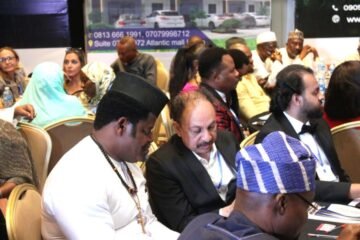
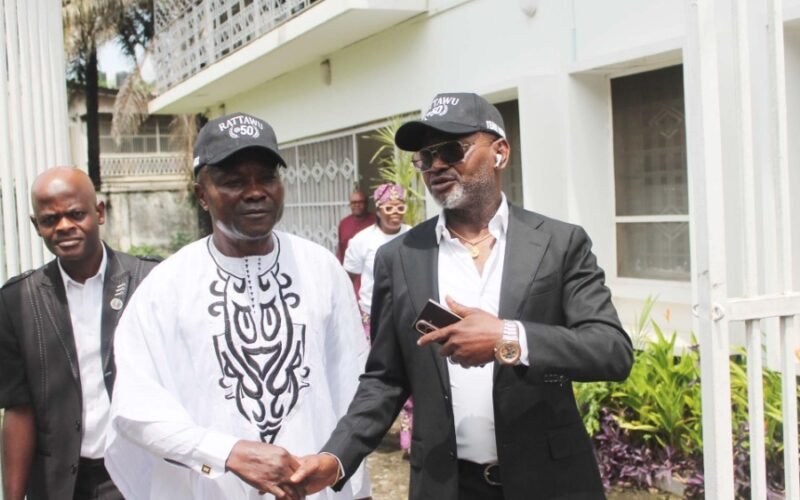
Consequently, the Union’s leadership, accompanied by a media delegation, paid a courtesy visit to Chief Ezisi in Lagos, where the philanthropist received them warmly.
The visit turned out to be more than a ceremonial engagement.
Clearly moved by the recognition coming from a national workers’ union, Chief Ezisi expressed appreciation for the honour and pledged his readiness to collaborate with RATTAWU in advancing initiatives that promote human welfare and societal development.
He also indicated his willingness to strengthen cooperation between RATTAWU and NAGAFF, opening a new chapter of partnership between the two organisations.
Another defining moment of the visit came when Chief Ezisi personally led the RATTAWU delegation and accompanying media team to pay homage to Dr. Boniface Aniebonam, the founder of NAGAFF and founder of the New Nigeria People’s Party (NNPP).
During the meeting, Dr. Aniebonam expressed surprise that RATTAWU had succeeded in persuading Chief Ezisi to step into the public spotlight.
According to him, the NAGAFF President has always preferred his work to speak for itself rather than seek recognition.
He commended RATTAWU for identifying and honouring such a personality, describing Chief Ezisi as a dependable man whose word can always be trusted.
As the curtains gradually draw closer on RATTAWU’s journey towards its 50th anniversary celebration, the Lagos visit has become more than just another item on the Union’s calendar.
It has reinforced a powerful message: That beyond the headlines, beyond the noise and beyond the endless pursuit of attention, there are still Nigerians quietly rebuilding lives, restoring hope and investing in humanity.
And perhaps, those are exactly the people whose stories deserve to be told.
By Comrade Amos Oge Kalu, Media/ICT Officer, RATTAWU Abuja.